
Fort Mill Resident Lookup Records
For Fort Mill, the useful records are held by York County and South Carolina custodians. Each answers a narrower question than a broad name search. A property card can connect an owner name with a parcel and tax-mailing field. A deed index can show parties to a transaction. Probate can identify an estate case. Court and vital routes have their own access limits. Start with the record closest to the known fact, then compare it with an independent source.
| Record | What It Confirms | Where | Access |
|---|---|---|---|
| Property card | Owner, situs address, tax map ID, legal description, latest deed reference | York County Property Card Search | Online by address, tax map ID, or owner; Assessor phone fallback |
| Recorded documents | Grantor or grantee role, transaction date, instrument, book and page | York County Land Record Search | Deeds and plats online from 1979; counter and books for earlier work |
| Court or municipal case | Publicly indexed party and case lead where available | York Public Index | Use the clerk or local court for file and copy procedure |
| Estate or marriage | Estate case, decedent, case number, and county marriage route | York Probate search | Estate records from 1975-current are online; other access is limited |
| Vital record | A qualifying birth, death, marriage, or divorce event | South Carolina DPH Vital Records | Eligibility, time periods, application, and fee rules apply |
Use the property route for a documented Fort Mill ownership question, and the probate route for a dated Fort Mill estate question. A court party listing is not proof of a current address. Likewise, an old directory or death-index entry is time-stamped evidence, not a present residence. This Fort Mill resident lookup stays more accurate when the record type, time period, and custodian all match the question.
Fort Mill Court Name Checks
Fort Mill Municipal Court participates in South Carolina’s statewide trial-court system, and York County is served through the 16th Judicial Circuit. The verified York route is the state Public Index endpoint. Its live form could not be inspected during the September 1, 2026 research because the endpoint returned HTTP 406. No search fields, result columns, coverage date, or docket format should be assumed from memory.
Use a known party spelling and a known Fort Mill case number or date when asking the right custodian for file access. Fort Mill Municipal Court is at 205 N. White Street and lists 803-396-0150; Fort Mill Magistrate is a separate local summary-court contact. York County Clerk of Court maintains Circuit and Family Court records. Juvenile, adoption, sealed, expunged, and protected matters may not be open through a public index. A missing result cannot establish that no case ever existed.
The South Carolina voter-services entry point is an official route for a person checking their own registration, not evidence for a court match.
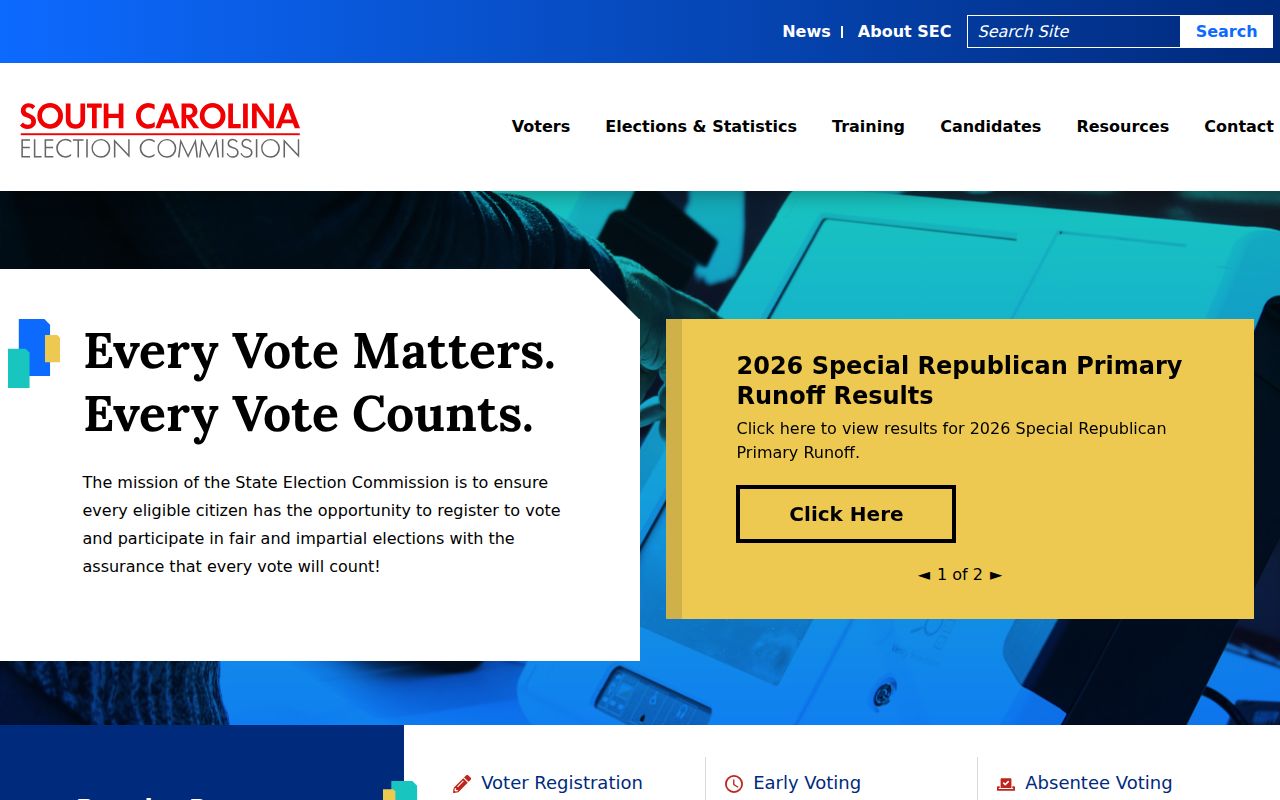
The state entry point leads to a restricted self-service form that requires identifying details from the voter’s own registration card.
Fort Mill Property Leads
A York County property card is a strong starting point when a Fort Mill resident lookup begins with an address or a documented owner name. The County allows card downloads by address, tax map ID, or owner name. The card can point to the property’s situs address, legal description, latest deed book and page, sale information, and prior grantor. It does not establish every person who lives there.
A selected Fort Mill property-card result can be inventoried without turning it into a household record:
- Owner name and separate tax-mailing fields
- Physical situs address and tax map ID
- Legal description with subdivision, lot, or block when returned
- Latest deed or plat book/page reference
- Sale, assessment, land-use, and homestead fields where the card displays them
Keep situs and mailing fields apart. The property address is the physical parcel location; the mailing field is where a tax notice is sent. For a boundary or transaction trail, take the latest book/page or legal description to the Register of Deeds and compare it with the recorded document. County map lines are approximate, so a plat or recorded legal description is the verification path.
- Tax map ID
- A County parcel identifier used to connect a property card, map result, and recorded-document research.
- Index versus image
- An index describes an item; the underlying image or paper file may supply detail and can have separate access rules.
- Certified copy
- A copy issued by the custodian with its certification when an ordinary online view is not enough.
Note: An owner field or tax mailing address can be a useful lead, but neither proves who currently occupies a Fort Mill property.
Fort Mill Probate and Vital Trails
York County Probate Court is the local route for estates, marriage licenses, guardianships, and related matters. Its online search is name- or case-number based, and the Court says estate records from 1975 through current are updated nightly. Public estate documents can be viewed without charge and prints cost $2 per document. A common name needs a case number, decedent, date, deed link, or legal-description comparison before it becomes a reliable match.
South Carolina Department of Public Health records follow different rules. Death records become public after 50 years; birth records after 100 years. Marriage and divorce reports have limited-recipient rules rather than the same age-based opening. DPH says its marriage certificates cover July 1950 through December 2023, directing other periods to the Probate Court that issued the license. Do not use a vital-record request as a generic present-address search.
DPH documents online, phone, in-person, mail, and state-office drop-off channels for birth and death requests, subject to the applicable form, identification, fee, and eligibility rules. Its marriage and divorce pages say in-person and drop-off routes were temporarily unavailable as of June 19, 2025, directing those requesters to mail or the approved online and phone route. For a Fort Mill marriage outside DPH’s stated range, ask York County Probate, 803-684-8513, about the local copy procedure.
The DPH birth-record page documents official application and request channels.
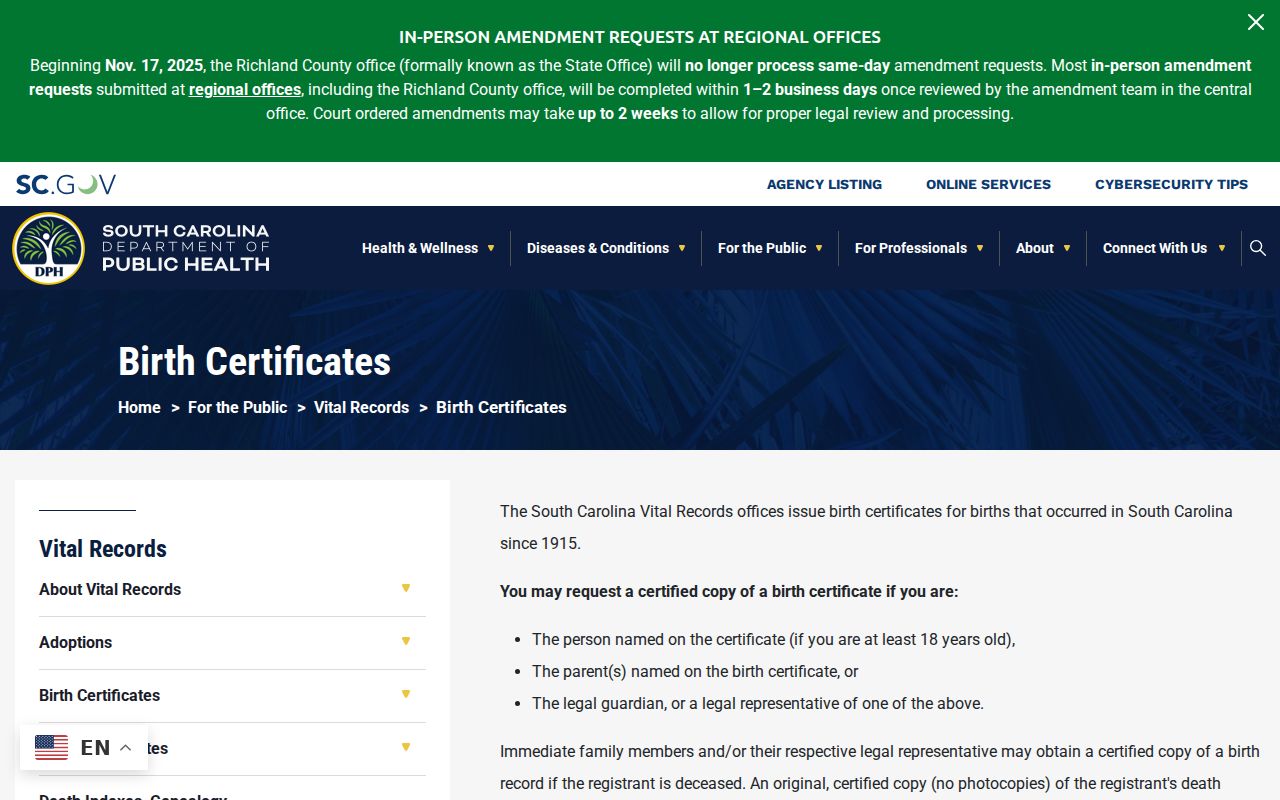
DPH requires the appropriate form, identification, payment, and eligibility for restricted certificates, so the form route should be checked before ordering.
Fort Mill Voter Record Limits
MySCVotes is designed for individual self-service. Its inspected registration form requires County, first name, last name, date of birth, and the last four digits of the Social Security number; choose York for a Fort Mill voter. It has no name-only option, street browse, ZIP filter, or public results table. A person correcting their own record should use that route or the York County Board of Voter Registration & Elections.
The State sells regulated voter-list products only to registered South Carolina voters. Those products have defined filters and data fields, but the service is not a public street or household browser. Participation history records an election participation event, not a ballot selection. Protected voters and Address Confidentiality Program participants have additional safeguards. These limits matter when a resident lookup turns up an address that seems plausible but is not independently confirmed.
For a Fort Mill correction or local election question, contact the York County election office rather than trying to infer a record from an address match.
Fort Mill Credential and Entity Checks
A Fort Mill professional credential or business filing can help distinguish two people with a similar name, but it has a limited meaning. The South Carolina LLR license lookup is the official credential route. The Secretary of State’s Business Entities search supports Begins With, Contains, and Exact Match for a business name, while the separate registered-agent search is capped at the first 50 results.
Compare a credential number or entity number with the issuing source. A license contact, business address, or registered-agent address can be a professional or service contact, not a residence. The Secretary of State notes that sole proprietorships and general partnerships do not file there, so an absent entity result does not settle a name question.
Verify a Fort Mill Resident
Fort Mill verification has more value than a broad name search. Begin with the source that fits the fact in hand, then make the next search more specific. York’s recording index removes punctuation, spaces, and special characters from its standard name search, while Probate says a name search must be spelled exactly as it appears in the estate record. Preserve those different rules instead of applying one spelling method everywhere.
- Use the Property Card or One Map to anchor a known address with its tax map ID, legal description, and latest deed reference.
- Open the Register of Deeds record by book/page or instrument number and compare the grantor, grantee, document date, and legal description.
- For an estate lead, search Probate by the precise name or case number and compare the decedent, date, and property connection.
- For a court lead, take the known spelling, court, and case number to the clerk when the online index does not provide a reliable answer.
- Request a certified copy only from the office that holds the record and only when its access rules permit it.
That sequence helps separate same-name records without converting a single database hit into a conclusion. For a street-wide address project, use the Fort Mill street directory rather than repeating this one-person workflow parcel after parcel.
Fort Mill Custody Record Checks
Fort Mill custody and registry systems have their own narrow purpose. The York County detention roster accepts a last-name search and displays current booking information only. A roster entry is not a final court outcome and is not a historical incarceration archive. For a disposition, use the appropriate court route.
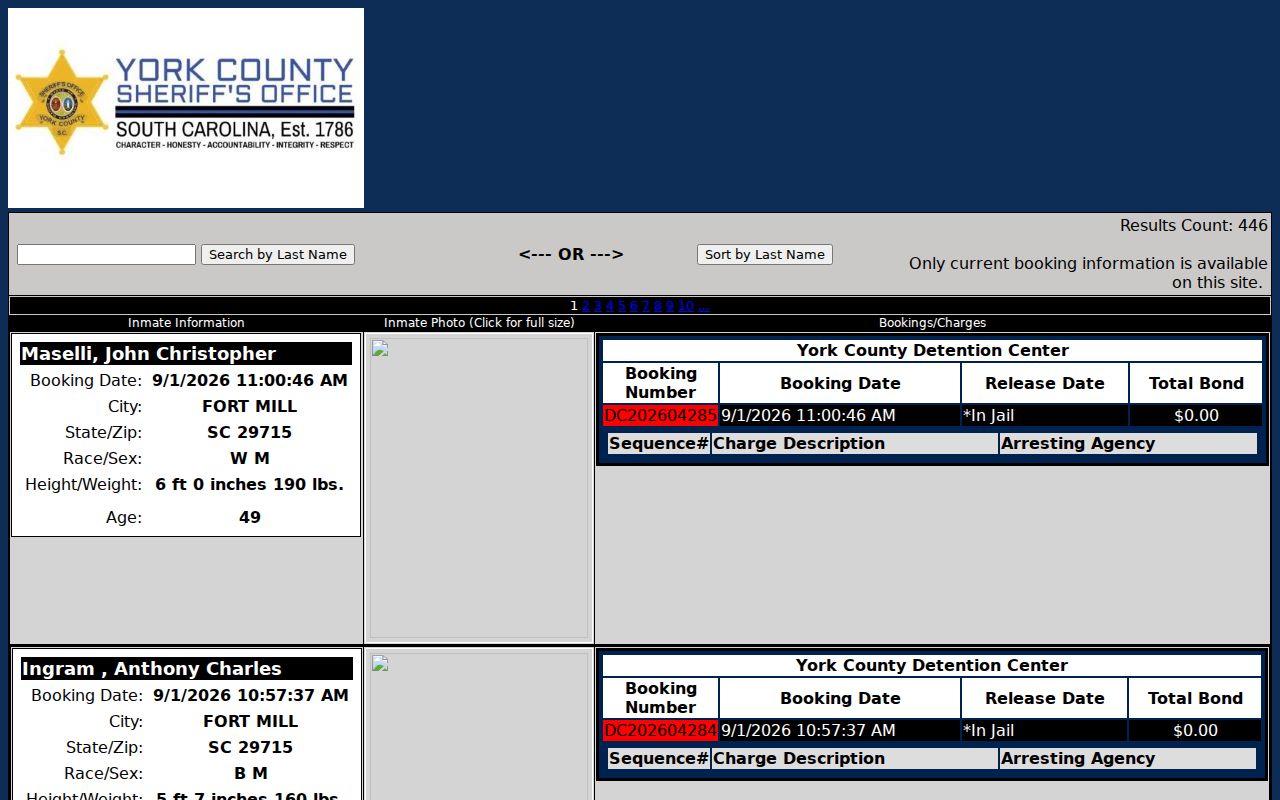
The County screen is a current-booking tool, so a changing booking row should not be treated as a stable personal record.
The South Carolina offender-registry entry point is separate and subject to its conditions of use.
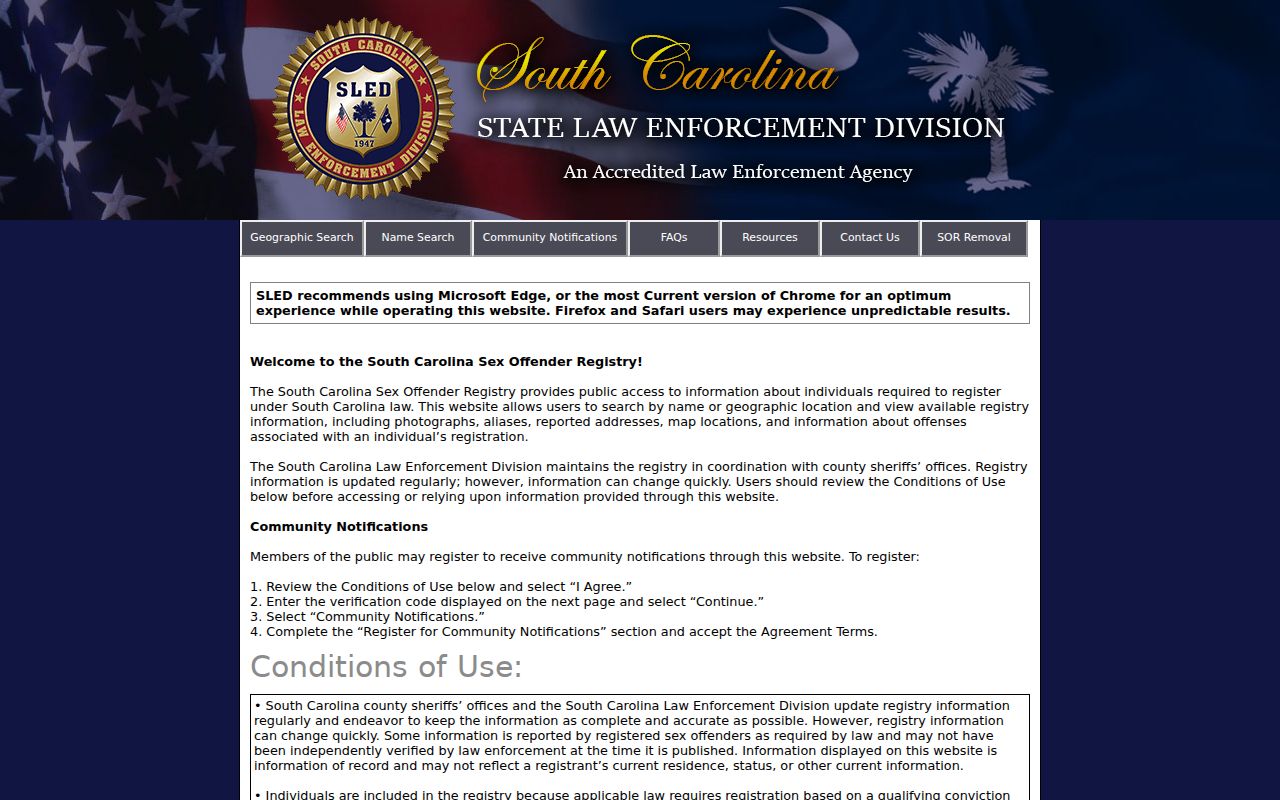
A registry result must be read under the source’s statutory limits and never used to infer a current household or a court disposition.
Fort Mill Records Request Paths
When a Fort Mill official search is unavailable, ask for a defined record rather than an open-ended person search. York County’s online FOIA portal is the County fallback under the South Carolina Freedom of Information Act, S.C. Code Ann. §§ 30-4-10 through 30-4-165. Provide the record type, date range, address or parcel, and the field needed. The County asks requesters to be specific.
For Town-held material such as address-keyed permit or code records, use the Town’s Fort Mill FOIA route, which offers online and printable request options. The Municipal Clerk can direct a requester to the correct Town channel. A request does not override exemptions or protected records, and it should not ask an office to compile a private household list.
The Town FOIA page shows the Fort Mill request channel.
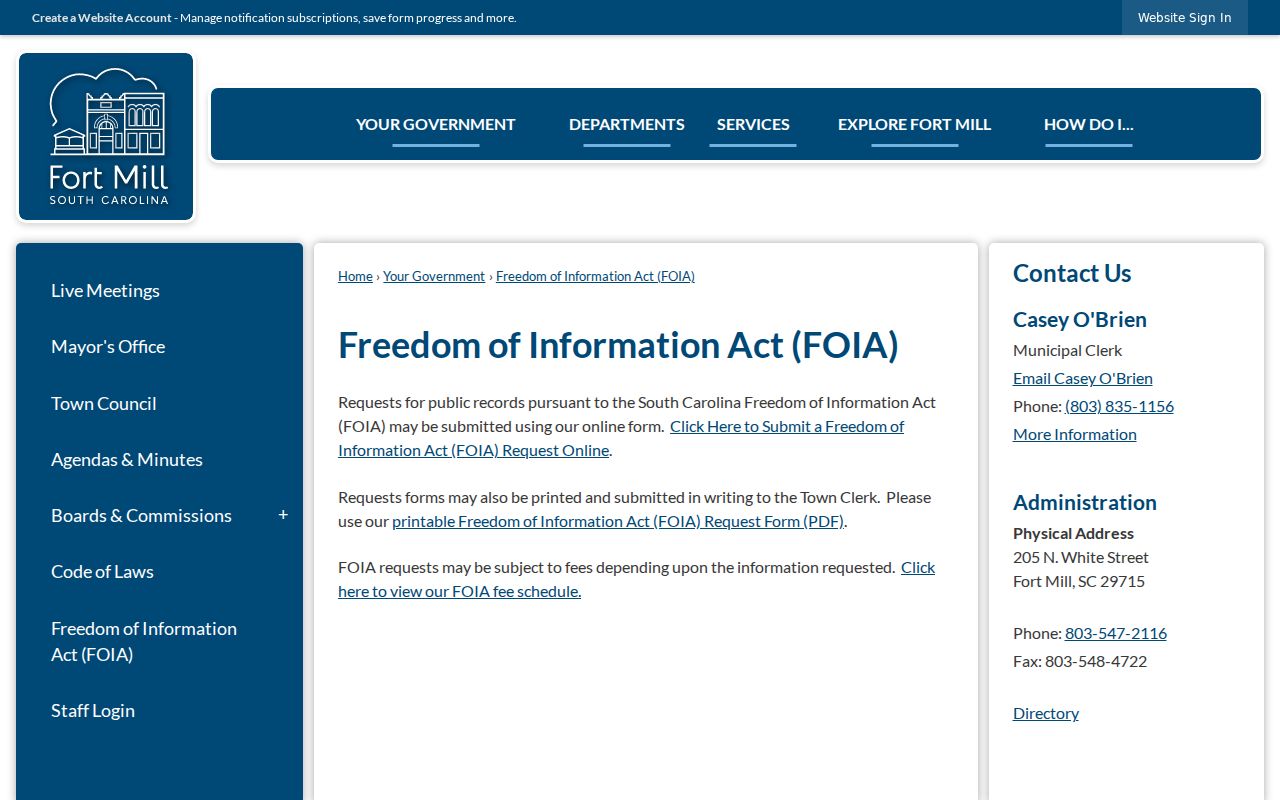
Use a written request when a specifically identified Town record is not already public online, then follow the custodian’s response and copy procedure.
Fort Mill Resident Lookup Limits
Fort Mill records follow South Carolina’s record-specific privacy rules. Vital certificates, protected voter fields, DMV data, sealed court materials, and Address Confidentiality Program information are not gaps to work around. Since January 2026, qualifying judges and law-enforcement officers may request limits on certain personal information appearing on publicly accessible government websites. A correction or redaction request goes to the custodian that maintains the record.
For a sensitive identifier in an online York deed or court image, S.C. Code § 30-2-330 provides a signed request route to the Clerk of Court or Register of Deeds. A no-fee redaction request must identify the page containing the identifier. The County’s process for eligible protected information is limited to online display; in-house access can follow different rules.
Lawful use. Use Fort Mill resident-record leads for personal, family-history, estate, civic, correction, or safety purposes. Never use a record to stalk, harass, intimidate, or expose protected details about another person.